What is the difference between cassava starch and corn starch?
What is the difference between cassava starch and corn starch? Though often used as thickeners, they are not interchangeable. Choosing the right one impacts your product's texture, clarity, and stability.
This clear comparison from Henan Jinrui, breaks down the difference between cassava starch and corn starch across four key areas, focusing on the distinct processing that defines each.
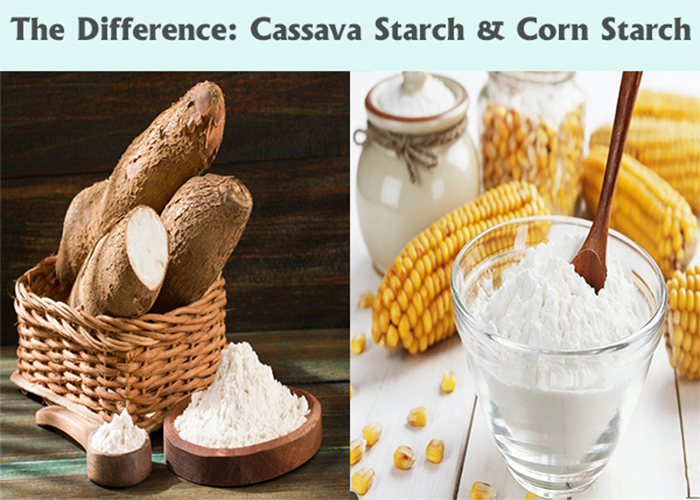 The difference between cassava starch and corn starch
1. The Root of the Difference: Tuber vs. Grain
The fundamental divergence begins at the source, setting the stage for entirely different processing challenges.
Cassava Starch: Extracted from the starchy tuberous root of the cassava plant. It is a naturally gluten-free, non-cereal source. Processing often deals with perishable fresh roots or dried chips.
Corn Starch: Derived from the endosperm of the corn kernel, a cereal grain. Processing focuses on the efficient fractionation of the kernel into multiple valuable components: starch, protein, fiber, and oil.
2. Functional Difference: Clarity, Texture and Stability
The molecular structure and granule morphology of each starch impart unique functional signatures, making them suitable for specific applications.
| Functional Property | Cassava Starch | Corn Starch |
| Paste Clarity | Exceptionally clear, glossy | Opaque, cloudy |
| Texture & Mouthfeel | elastic; provides a soft, "Q" texture | non-cohesive; can form firm |
| Flavor Profile | Bland, neutral | Slight cereal or "raw" note |
| Freeze-Thaw Stability | Excellent; minimal syneresis | Poor; tends to weep water upon thawing |
3. The Core Technological Difference: Processing Pathways
This is the most critical differentiator for producers. The processing pathways for cassava and corn starch are fundamentally distinct, requiring specialized equipment and process design.
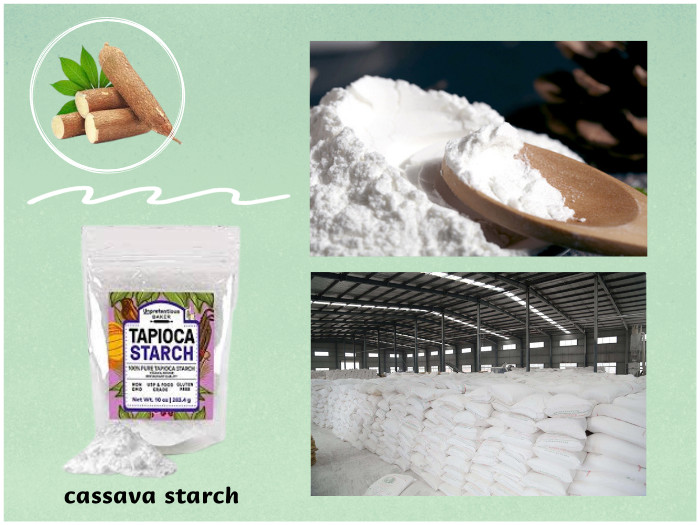 Cassava starch production
A. Cassava Starch Processing: Focus on Purity & Integrity
The goal is to extract and preserve the native starch granules from a fibrous root with minimal damage to ensure high viscosity and whiteness.
Cleaning & Rasping: Fresh roots are thoroughly washed and disintegrated in high-efficiency raspers.
Extraction & Fiber Removal: Starch milk is separated from coarse pulp using centrifugal sieves and fine fiber washing screens.
Purification (Critical Step): The starch slurry is refined through a multi-stage hydrocyclone station to achieve high whiteness and low ash content.
Dewatering & Gentle Drying: Purified starch is dewatered and then rapidly dried in a flash dryer to preserve its high paste viscosity.
Sifting & Packaging: The final product is cooled, sifted for uniformity, and packaged.
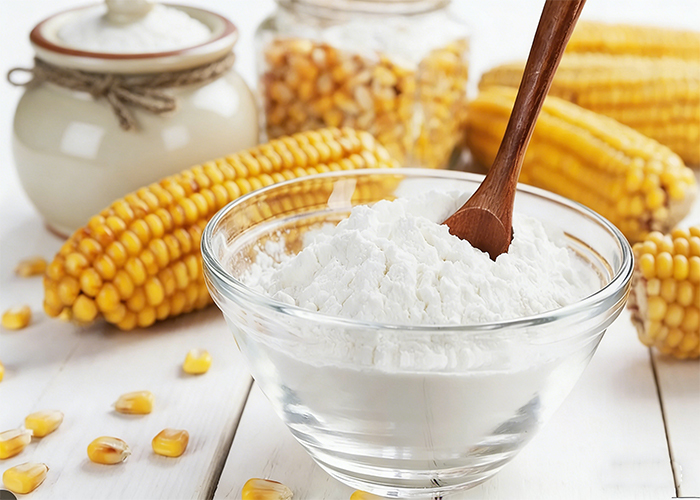 Corn starch production
B. Corn Starch Processing: Focus on Fractionation & Value Recovery
The process is designed to disassemble the corn kernel and separate all its major components efficiently, maximizing component value recovery, handling germ, fiber, protein, and starch.
Cleaning & Steeping: Kernels are soaked (steeped) to soften and break down protein bonds.
Grinding & Germ Separation: Coarse grinding releases the germ, which is separated via hydrocyclones.
Fiber Separation (Screening): The slurry is finely ground and passed through screens to remove fibrous hulls.
Starch and Protein Separation: Centrifuges or hydrocyclones separate starch from gluten protein.
Washing & Refining: The starch is washed multiple times to remove remaining impurities.
Drying & Packaging: The starch is dewatered and flash-dried to the required moisture content.
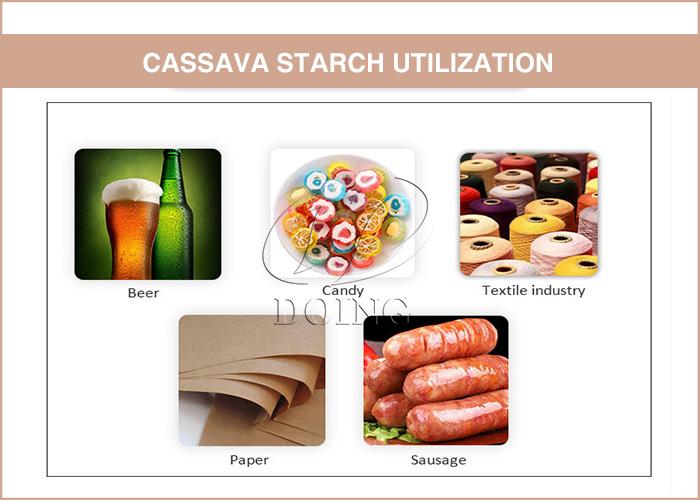 Cassava starch application
4. Application Difference: Diverging Market Paths
The distinct functional profiles naturally guide each starch to its dominant market segments.
Cassava Starch: Dominates applications requiring clarity, smooth texture, and superior freeze-thaw stability. Key uses include boba pearls, transparent noodles, frozen food sauces, biodegradable materials, and premium gluten-free formulations.
Corn Starch: Prevalent in opaque, gelling, and high-volume industrial applications. Common in paper and textile manufacturing, confectionery (gummies), pie fillings, soups, and as a primary feedstock for sweeteners like high-fructose corn syrup (HFCS) and various modified starches.
Ultimately, recognizing the fundamental differences between cassava starch and corn starch—from their source and functionality to their distinct processing pathways—is crucial for making informed decisions.
For investors and processors,Selecting the right processing technology is critical to realizing the full potential of your chosen starch. Henan Jinrui provides specialized equipment solutions tailored for both cassava and corn starch production, ensuring efficiency and high-quality output. Contact us to discuss the optimal solution for your project.


Comments
Post a Comment
Hi,write down you message,and let's talk according the difference.